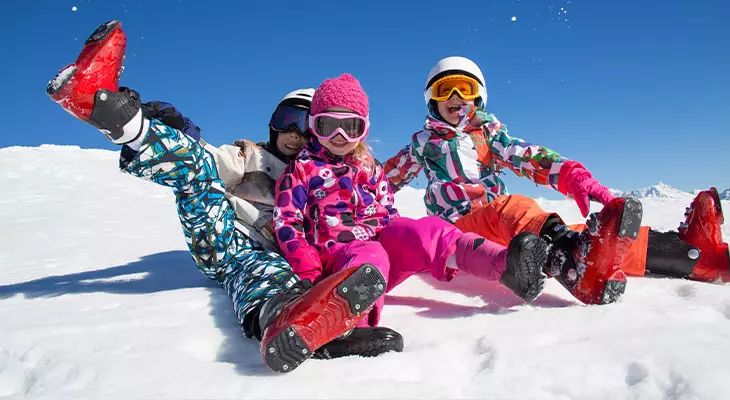
How do you choose the right ski boots for your child? For some parents, it can seem almost like a dark art, even if they are experienced skiers themselves. Yet a few simple tips will help you find the ideal boot. To select the right size, don’t rely on your child’s usual shoe size—look at the foot length in centimeters instead. Pick a soft, comfortable junior boot that your child can close on their own. This ensures pleasant and safe winter holidays for the whole family!
How to choose ski boots in the right size for your child
When selecting ski boots for your child, do not rely on their usual shoe size, which can vary significantly across brands (especially U.S. brands, which often run larger than European manufacturers).
Ski boots are chosen based on foot length in centimeters (Mondopoint system). To measure accurately, use a foot measuring device (pedimeter). You can also use the classic paper method: place your child’s foot on a sheet of paper and mark the heel and the tip of the longest toe with a pencil.
Choosing ski boots that are too large is a common mistake. Boots that are too big can slip off while skiing and cause discomfort or even injury. On the other hand, if you buy new boots, your child’s feet may grow quickly, making them too small the following year.
That’s why renting skis and boots from Sport 2000 can be ideal. They offer equipment for Baby, Junior, and Teen, with levels from beginner to advanced. Children’s boots are selected with the same care as adult models, from brands like Head, Rossignol, Salomon, and Lange. Renting also ensures expert advice and proper binding adjustment, which is critical for safety.
Pay attention to your child’s socks. Don’t try to compensate for a too-large boot with thick socks—this can be uncomfortable and limit progress. Avoid wool or cotton socks in winter; they are warm but not breathable, and wet snow can make them unpleasant. Choose ski-specific socks (usually synthetic), which are thin, warm, breathable, and dry quickly.
Important reminder: Always use the proper safety gear for your child, regardless of their skill level. Helmets and ski goggles are essential, available in multiple sizes at all ski shops at affordable prices.
How to find boots that guarantee comfort
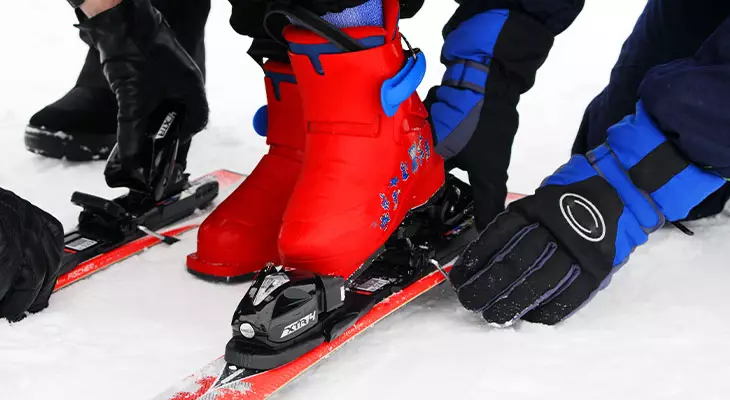
Junior ski boots must also be comfortable. When trying them on, make sure your child feels at ease, including in a forward-leaning stance (like during a schuss). Ensure the boots are not too tight, cause no pain, and your child can close them independently.
The boot’s flex indicates its stiffness. For children, choose a soft shell with a flex index of around 50. Children under 6 will likely start in a ski kindergarten, whether at Val Thorens, Morzine, or Courchevel. The boot should be soft and comfortable to facilitate learning and movement, with a single buckle being sufficient for this age.
From age 6 onward, children progress to higher difficulty lessons, learning to skid and handle steeper slopes. They need boots that allow faster movements and provide stability. A soft flex shell with three buckles ensures comfort and proper support.
Do not overtighten the boots, as this can hinder blood circulation and reduce comfort, which may discourage your child. This advice applies to adults too, who sometimes overtighten boots, prioritizing support over comfort.
Finally, maintain your child’s boots by airing them. Ideally, choose a model with a removable liner that can dry overnight, ensuring dry, comfortable boots for the next day.
Need more guidance? Check our adult ski boots guide and our cross-country ski boots guide.