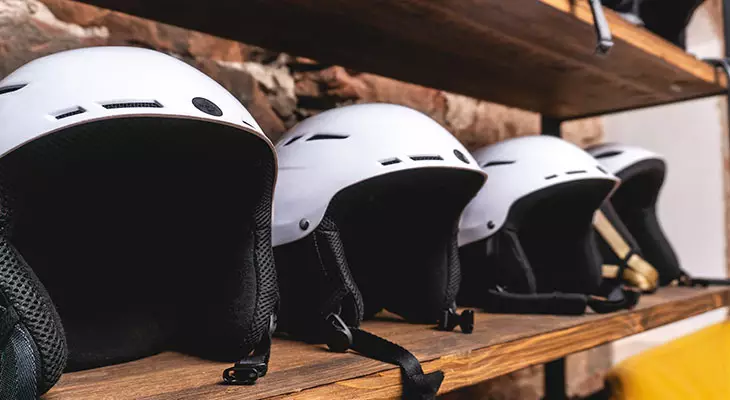
Although wearing a helmet is not yet mandatory on alpine ski slopes (outside of lessons), it is strongly recommended at all ski resorts in France. Helmets help protect the heads of both children and adults in case of falls or collisions, regardless of skill level—from beginners to expert skiers.
To be effective, a helmet must fit properly and provide real protection. Here are some tips to help you choose the right ski helmet and understand its key features. Remember, we also offer expert advice for choosing your goggles, snowboard, ski boots, and other gear under the “Other winter sports equipment & accessories” category.
Finding the right helmet size
The first step in choosing a ski helmet is knowing your head size. To be both safe and comfortable, the helmet must sit snugly on your head without being too tight, especially around the temples.
To choose the correct size, measure your head circumference. Use a tape measure and wrap it horizontally around your head, aligning it with your eyebrows. This measurement in centimeters will guide your helmet choice.
Tip: If you don’t have a tape measure, use a string or cord, then measure its length with a ruler or meter stick after laying it flat on a table.
Helmets are often categorized by men, women, teens, or children to make it easier to find the right fit.
Choosing a helmet based on your discipline
Helmet choice is not just about size—you also need to consider how you will use it. If you plan to ski or snowboard on marked slopes, a classic, versatile helmet is sufficient to protect you in case of falls or collisions.
If you want to try freestyle skiing or snowboarding, choose a helmet designed specifically for that purpose, which is more durable and resistant.
For ski touring or freeride, lighter helmets with better ventilation are recommended. They are more comfortable, allow airflow, and still protect from the cold. Since these activities typically carry a lower risk of high-impact falls (unless you tackle dangerous terrain), a heavy, robust helmet is not necessary.
Other features to consider
Safety is the main priority when choosing a ski helmet, but comfort and functionality matter too. Manufacturers offer helmets with optional features such as:
- Ventilation: helps release heat. Helmets with “in-mold” construction are lighter and better ventilated than ABS helmets.
- Adjustable systems: allow perfect fit with your head and other gear (goggles, glasses), improving comfort.
- Inner padding thickness: more padding offers extra protection from the cold.
- Integrated visor: eliminates the need for separate goggles or glasses.
- Audio system: for listening to music while waiting in lifts or taking breaks. Note: do not use while skiing or snowboarding to avoid reduced awareness of your surroundings.
Optional features increase the price significantly, especially for high-end helmets with MIPS technology, photochromic visors, or advanced ventilation. Basic helmets that ensure comfort and safety start at around €40, while children’s helmets typically cost between €25 and €60. This allows you to protect yourself without spending a fortune—because safety is priceless.
Choose a helmet based on your budget, needs, and usage frequency. There is little need for a top-of-the-line helmet if you ski only one week per year; a mid-range model will suffice.
Finally, remember that during your ski vacation, you can also rent adult or children’s ski helmets at Sport 2000 stores. You will be guaranteed a helmet that meets current safety standards, from trusted brands like Poc, Smith, Bollé, Oakley, Julbo, etc. Each helmet is regularly checked, and the inner lining is disinfected between rentals.