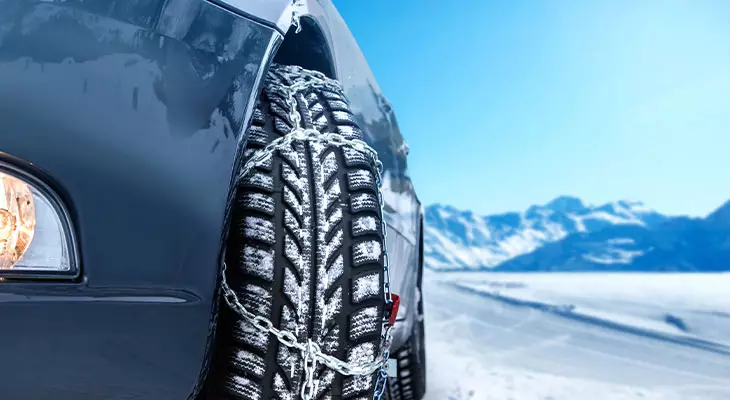
Often seen as a tedious task on the way to a ski holiday, why is it necessary to fit snow chains in the mountains? Because on heavily snow-covered roads, ordinary tires are not enough—your vehicle may skid, increasing the risk of accidents. Here’s what you need to know about the characteristics of snow chains and the recommendations for installing them, to properly prepare your ski trip and drive safely.
Why put snow chains on your car?
On icy roads or in heavy snow, only snow chains or all-season winter tires will ensure your vehicle’s stability, significantly reducing the risk of accidents with other drivers.
Furthermore, since 2021, during winter, you are required to carry snow chains (metal or textile) in your car trunk in mountain areas and to equip your vehicle’s wheels with all-season tires in certain mountain zones and ski resorts.
This regulation for mandatory winter equipment in France applies to passenger cars, utility vehicles, motorhomes, coaches, and heavy trucks.
Note that if an accident occurs on a stretch of road where chains are required, your car insurance may penalize you if you did not install them (no compensation, higher premiums, etc.).
So, there are only benefits to following the regulations for winter car equipment—whether for safety, comfort, or ensuring your insurance works properly!
If you see a "B26" sign, you must fit snow chains on at least the two drive wheels of your vehicle. The B44 sign (depicted as a tire with crossed snow chains) indicates the end of the obligation to use chains. In short, if you plan to ski in Gérardmer or Chamonix, you will need to install this equipment.
What you need to know about snow chains
First, you must install at least 2 snow chains in the mountains on at least the 2 drive wheels of your vehicle (rear wheels for rear-wheel drive, front wheels for front-wheel drive), ideally chaining all 4 wheels for maximum traction. Once the snow chains are installed, you cannot drive faster than 50 kilometers per hour.
Snow chains differ from tire socks: less protective, textile socks are only suitable for lightly snow-covered roads. In contrast, linked metal chains are suitable for heavily snow-covered roads because they provide strong grip.
If you have snow chains for mountain use, they must be in good condition and compatible with your vehicle’s tire size (indicated by letters and numbers on the tire sidewall), otherwise you risk damaging your car or losing the chains while driving.
You must also consider the make and model of your vehicle.
There are snow chains with manual tension (you tighten the chain yourself) or automatic tension (the chain tightens while driving). If you frequently travel on heavily snow-covered roads, you should choose the latter.
If you have aluminum rims, make sure your mountain snow chains have a protective system to avoid damaging your rims (not necessary with steel rims).
Finally, regarding price: chains are often sold in pairs, costing between
Socks are usually cheaper, but as mentioned, they do not offer the same level of protection.
How to chain your vehicle
The first step is to engage your handbrake. Install chains on a flat surface, not on the road. Wear a safety vest and use gloves to protect yourself from the cold.
Refer to the instructions that come with your chains for guidance on fitting them around your tires. Good tips to remember: practice installing your vehicle’s snow chains before your trip to avoid wasting time and unnecessary stress. Check the tension to ensure the chains do not come off while driving.
If you need to install snow chains at night in the mountains, you will also need a snow shovel to clear wheels stuck in snow and a headlamp to help with the installation.
Once at the resort, rinse your chains with water and let them dry.
Be careful: some ski resorts, like Avoriaz, completely prohibit car access, with or without chains.
Winter tires or snow chains?
According to a recent Swiss study, winter tires (so-called "snow tires") are more effective for braking than snow chains in the mountains (a difference of 10 meters). In any case, make sure your tires match your wheel dimensions and choose high-quality tire brands (Michelin, Bridgestone, Dunlop...).