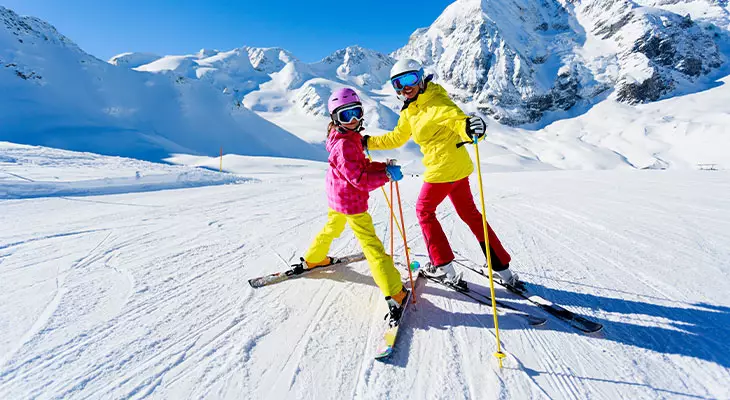
Do you have a margin for improvement in skiing and want to enhance your technique on turns, gain speed, handle mogul runs better, or correct bad habits? To achieve this, it’s essential to choose the right equipment, take lessons with professional ski instructors, practice your technique independently, and learn from more experienced skiers. Watching tutorial or competition videos can also help. Finally, completing tests organized by the French Ski School (ESF) will validate your level and boost your confidence. This guide explains everything in detail so you can enjoy the thrill and sensations of skiing!
Step 1: Choosing the right equipment
How can you progress in skiing without the right gear? Having suitable equipment is one of the most important conditions for improvement.
Comfortable ski boots prevent foot and shin pain while helping you perform movements more easily. They must provide stability in your stance.
Your skis should also match your real skill level to avoid being limited by unsuitable equipment. Beginners need shorter skis than expert skiers for easier maneuverability. All-mountain skis are recommended, designed for any type of snow, and wide enough to provide stability and correct basic mistakes.
If you’re unsure which equipment to choose, consider renting skis at Sport 2000 for your mountain holiday. Online, you’ll find various categories of alpine skis by skill level. In-store, the team can advise you and provide skis and boots that will maximize your enjoyment on the slopes. Ski technicians will also adjust the bindings, which are crucial for safety. Renting is therefore the most practical solution for having the right equipment!
How to improve quickly: take lessons!
Hiring an instructor for private or individual lessons will accelerate your progress. Professional ski instructors identify your mistakes, give useful tips, and tailor lessons to your level (beginner or more experienced). Even if you’ve skied before, it’s an opportunity to review fundamentals (stopping with a snowplow or skid, turning, keeping balance, etc.) before moving on to more technical maneuvers.
The key is to attend all lessons and stay focused to fully understand how to progress. Ideally, ski 2 to 3 hours per day during your stay, taking a day or two off depending on how you feel.
Putting theory into practice: practicing your technique
Once you’ve mastered the snowplow, learn to skid and ski parallel. This step marks the transition from beginner to intermediate skiers.
Another crucial point is learning the skid-stop technique and mastering speed control. At first, practice on beginner or less crowded slopes to work calmly on skidding and technical movements.
Don’t get discouraged by the first challenge or a steeper slope—otherwise, you’ll never succeed.
Overcome your fear of steep slopes and speed. Skiers who truly improve are those who get used to skiing forward—fear tends to make skiers lean back, losing control.
You have to be ready to "attack the slope"!
As you master these techniques, you’ll execute them automatically, ski faster with more fluidity, and descend difficult slopes confidently while enjoying the ride.
Finally, maximize your chances of success by being physically prepared—ideally do some sports before your trip to strengthen your legs and overall body.
Learning from others: skiing with more experienced skiers
Observing and skiing with more experienced and confident skiers will also help you progress. They give advice, take you on slopes or sections you need to follow, and encourage you along the way. You’ll learn by watching their posture, movements, and style, assimilating proper techniques without realizing it!
Learning is also possible by watching online tutorials: well-made instructional videos quickly teach correct techniques.
Why not have friends film you skiing and then review the footage to spot strengths and weaknesses? You can adjust body alignment, foot position, and more.
You can also watch official ski competitions, such as the French Alpine Ski Championships held at locations like Serre-Chevalier or Val Thorens. Live viewing is an option, but many videos of major national competitions, including the Winter Olympics (e.g., on YouTube), are also available.
Solidifying progress: passing ESF levels and competing
To confirm your progress, taking alpine skiing tests organized by the French Ski School (ESF) is an excellent way to assess your skills: flocon, étoiles, flèche, chamois... Your medals will validate your skiing level, boost confidence, and motivate further improvement. Afterward, why not try competitions to set new goals!