Would you like to try a new style of sliding? Step out of your comfort zone and enjoy snowy landscapes? Why not try cross-country skiing? We’ll explain the different techniques and the equipment involved to help you find the style that suits you best.
Note that classic cross-country skiing has given rise to several subcategories: skating, ski touring, snowshoe skis, Telemark… What are the characteristics of each? Are there any versatile skis that combine the benefits of cross-country and alpine skiing? Let’s take a closer look at these technical yet accessible winter sports.
The original types of cross-country skiing
If you plan to practice cross-country skiing on dedicated trails, several styles are accessible. Let’s explore each type in detail.
Classic cross-country skiing
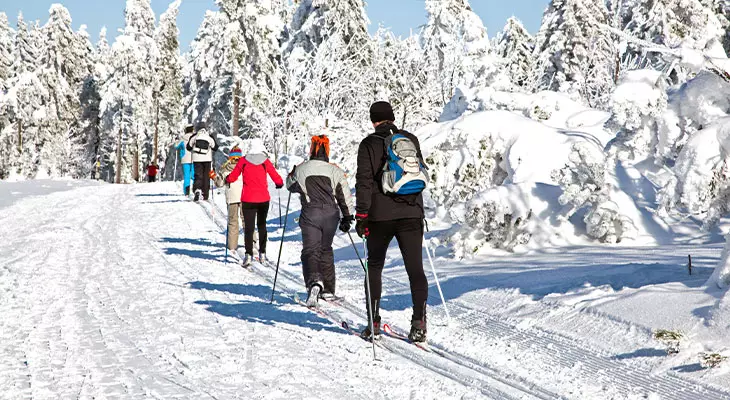
This style mimics walking movements (called the diagonal stride). Unlike some other forms of cross-country skiing, classic skiing is easy to practice even on pre-set tracks or variable snow conditions. For beginners, classic skiing is a great way to get started.
Cross-country skis differ from other similar skis by having a grip zone under the foot for propulsion and smooth areas at the tip and tail of the ski.
They are also noticeably long, measuring on average 20–25 cm longer than the skier’s height.
Skating cross-country skiing
Invented shortly after classic cross-country, skating skiing is slightly different. The skier moves with skater-style strides (used in biathlon). Based on gliding, with nearly constant pole use for propulsion, skating is somewhat more technical than classic cross-country skiing.
Skating skis are shorter than classic cross-country skis, measuring 10–15 cm longer than the skier’s height.
What about cross-country ski boots? There are versatile boots for both classic and skating skiing, or models designed specifically for each type. Renting from a Sport 2000 store gives you a complete cross-country ski package (including poles), so you don’t have to worry about boot compatibility.
Nordic skiing
Nordic skiing is designed for off-piste skiing in deeper snow. These skis are wider than classic or skating skis and often equipped with metal edges for better grip on snow and ice.
However, Nordic skis are not suitable for downhill skiing.
Other cross-country inspired ski categories
Beyond classic cross-country skiing on dedicated Nordic trails, there are several related disciplines to explore on alpine ski slopes, dedicated routes, or off-piste terrain.
Ski touring
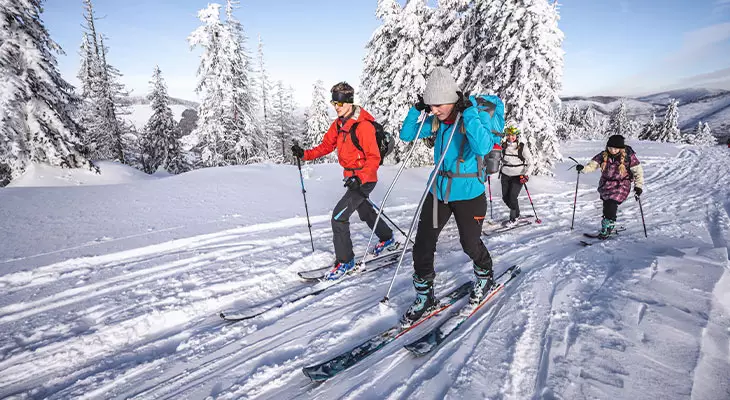
Ski touring (not to be confused with freeride skiing) is a hybrid of classic cross-country and alpine skiing. The skier can lift the heel of the bindings to climb steep terrain easily. These skis are equipped with climbing skins and are lighter for easier ascent.
After climbing, the skier locks the heel and can ski downhill like with alpine skis. Off-piste skis are wider than classic cross-country skis to float better in powder. This sport requires a good level of fitness and technical skill.
Telemark skiing
Telemark skiing stands out among the different types of cross-country skiing. Its hallmark is a free-heel binding, and turning requires mastery of flexion-extension, especially on challenging terrain (bumps, steep slopes, etc.). This is a technical discipline but can be learned through lessons or discovery days at resorts.
Snowshoe skis
Snowshoe skis are small alpine-style skis, wide enough to float on snow, similar to snowshoes. You can easily explore snowy landscapes, and like classic cross-country or snowshoes, the heel can be freed from the bindings. Unlike other cross-country skis, once secured, they allow downhill skiing, although they do not reach the speeds of freeride or touring skis.
Where to practice cross-country skiing?
In France, many resorts offer high-quality cross-country skiing areas, such as Font-Romeu, Les Saisies, Névache, La Clusaz, Les Rousses, and the Sancy area. Across all French mountain ranges, cross-country skiing is possible, often surrounded by pristine nature and stunning landscapes. Some smaller resorts are even exclusively dedicated to cross-country skiing.
If it’s your first time, consider taking a few hours of lessons with an ESF instructor: they will help you master the skating or classic stride, properly position your feet, and adopt the correct technique to enjoy the trails, whether flat, uphill, or downhill. Lessons are also great for improving technique and gaining speed for experienced skiers.
To get the right equipment or maintain your own skis (waxing, adjustments, etc.), visit Sport 2000 stores. Many offer adult rental packages, and sometimes child packages, for both skating and classic cross-country skiing.