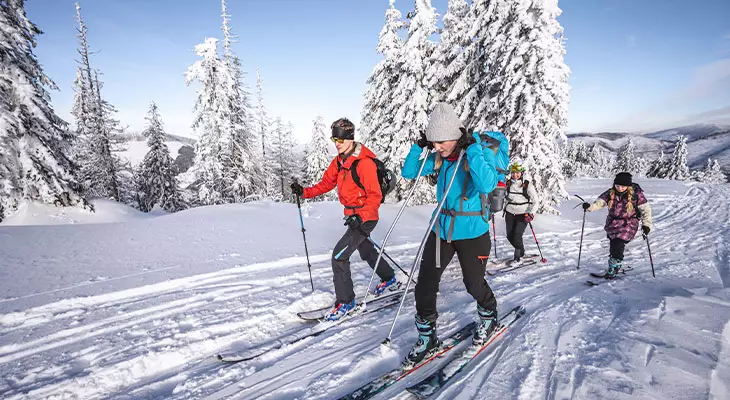
At first glance, they may seem quite similar, but there are notable differences between classic cross-country skiing and skating. Beyond the skier’s posture, the equipment differs. While classic cross-country skiing is easier to master, skating requires more perseverance and energy to fully enjoy the sport. Discover all our tips in this guide!
The motion: main difference between classic skiing and skating
Traditional cross-country skiing (or Nordic skiing) is based on the gliding-walking technique (also called diagonal stride), which involves mimicking the walking motion by lifting and pressing each leg while simultaneously pushing with the poles.
Typically, classic skiing follows two parallel tracks prepared by previous skiers or the resort. However, it is also possible to practice on firmly packed snow.
In contrast, ski skating involves gliding steps (also called "skater steps", similar to ice skating). This discipline is more demanding but allows you to gain more speed, and arm movement with poles is essential for propulsion and climbing.
Remember, both styles are practiced on dedicated trails. Do not attempt to use cross-country skis at the base of an alpine slope or off-piste!
Ski equipment: features specific to each discipline
Since classic skiing and skating are performed differently, the equipment varies.
Differences in skis
Classic skis have a grip zone (wax, scales, or mohair) under the foot to maintain traction. They also feature an anti-slip system to aid the skier’s stride.
Skating skis have no grip zone, are shorter with smaller tips, and are stiffer than classic skis.
Ski length is generally greater for classic skiing than for skating. Bindings for classic skis are narrower and lighter. Skating poles are longer than those for classic skiing (which should reach shoulder height).
Renting at Sport 2000 ensures proper sizing, binding adjustments, shoe compatibility, and ski style advice for your level.
Cross-country ski boots
Unlike alpine or touring boots, cross-country boots are not fully rigid. Some boots are versatile for both classic and skating, but it is recommended to choose boots specifically for each discipline.
Classic cross-country boots are low-cut with medium cuffs and softer soles, while skating boots have stiffer soles and higher cuffs for ankle support.
How to choose between classic and skating
Classic skiing is easier for beginners, while skating is suited to more experienced skiers. If you’re comfortable and fit, you can try skating or even a biathlon initiation. Skating is the style used in biathlon competitions (ski + rifle shooting) and has grown in popularity. Stations like Font-Romeu, Megève, or Villard de Lans offer fun ways to learn.
You can also hire a mountain guide to learn the basics of classic skiing and explore the world of cross-country skiing. France has many Nordic ski areas with qualified instructors.